Dishwasher Guide
Dishwasher Not Drying Dishes? Causes & How to Fix It
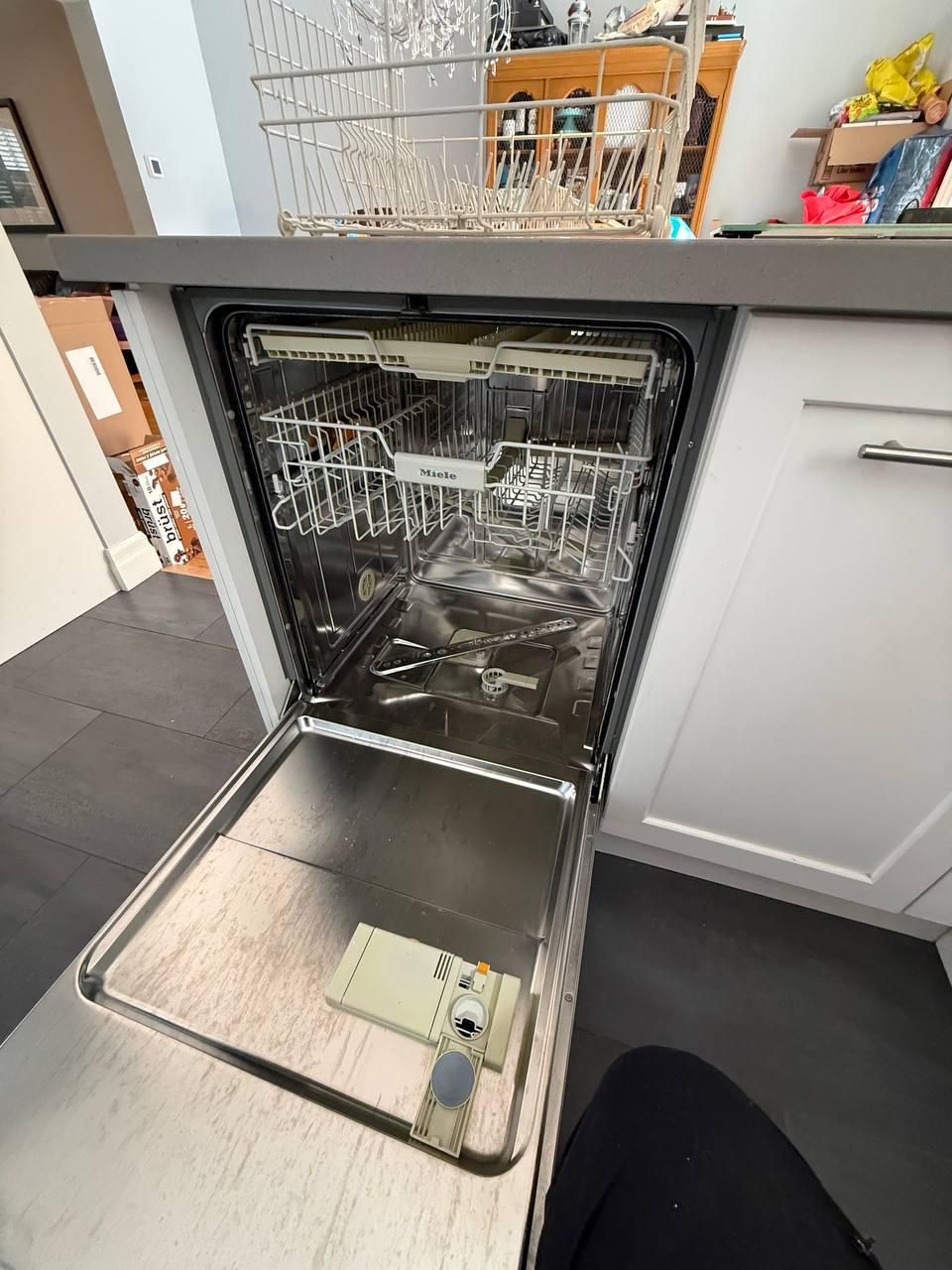
Open the door an hour after the cycle and everything's beaded with water. Plastic containers have puddles. The glasses are fine, the tub walls are dripping. Is the dishwasher broken?
Usually not. Most wet-dish complaints come down to rinse aid, cycle choice, and how the racks were loaded. The heating element, vent, and fan are real suspects too, and there's a simple way to tell which camp you're in.
Wet walls are normal. Wet dishes might not be.
Nearly every modern dishwasher relies on condensation drying at least in part. The final rinse heats the dishes; the stainless tub cools faster than glass and ceramic, so moisture from the dishes condenses on the walls and runs down to the drain. Whirlpool's product help says plainly that condensation on the interior walls is part of the normal drying process. A wet tub with dry plates means it's working.
Plastic is the exception. It doesn't hold heat, so it never drives the moisture off. Bosch, Whirlpool, and GE all say the same thing: plastics belong on the top rack and may need a wipe.
Five things to try before calling anyone
- Fill the rinse aid. Bosch describes it as helping water droplets slide off dishware, and GE and Whirlpool list an empty dispenser as the first thing to check. If your dishwasher has a rinse-aid dose setting, turn it up one step at a time for hard GTA water.
- Pick a drying option. Bosch: Extra Dry or Sanitize. Whirlpool: Heat Dry, Extended Dry, or Door Open Dry where fitted. GE: Heated Dry or Power Dry. The eco default on many machines skips or shortens the heated phase.
- Run the kitchen tap hot before you press Start. GE wants 49 to 60 °C (120 to 140 °F) water entering the dishwasher; a cold first fill means a cooler final rinse and less heat to dry with.
- Leave space. Nesting bowls and overlapping plates hold water between them. Tilt cups and containers so they can't pool.
- Unload the bottom rack first, so water sitting on top-rack mugs doesn't rain on dry plates below.
When it's a part
Here's the quick test. Open the door right at the end of a heated-dry cycle. If a wave of hot, steamy air comes out, the heater and its circuit are doing their job and the problem is almost certainly rinse aid, loading, or cycle choice. If the air is lukewarm and the dishes are cold and wet, something in the drying system has failed.
On machines with an exposed heating element in the tub floor, the element, its high-limit thermostat, and the wiring are checked for continuity; an open element is a straightforward replacement. On models that vent steam through the door or the top of the tub, a vent door that won't open or a vent fan motor that has failed traps the humid air inside, and the dishes stay wet no matter how hot the rinse was. Whirlpool notes one tell on its own machines: a Sanitize light that blinks instead of staying lit can mean the water never reached temperature, which points at the heater.
Bosch's newer machines are a special case. Many have no exposed element at all and dry by condensation, an auto-opening door, or a zeolite mineral drying system. Wet dishes on those usually mean rinse aid or the drying option was skipped, not a failed part.
When to book a repair
- No warm air at the end of a heated cycle, even with rinse aid full and Extra Dry or Heat Dry selected.
- The dishwasher also isn't cleaning well, or the cycle runs much longer than it used to. A failed heater affects the wash too.
- You can hear the vent fan cycling but nothing leaves the vent, or the vent flap is visibly stuck.
- Water is cold at the end of the cycle on a machine that used to steam.
Rather have a pro handle it?
Our technicians repair this across Toronto and the GTA — same-day in many cases, with clear pricing and a warranty on the work.